
Consulting Examples
Example #1: VAWT
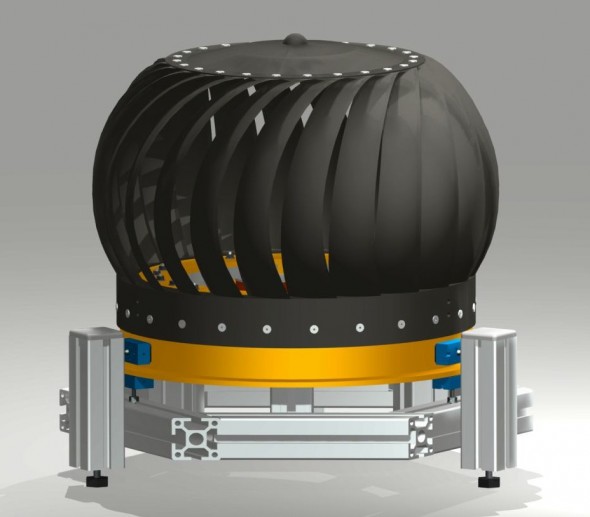
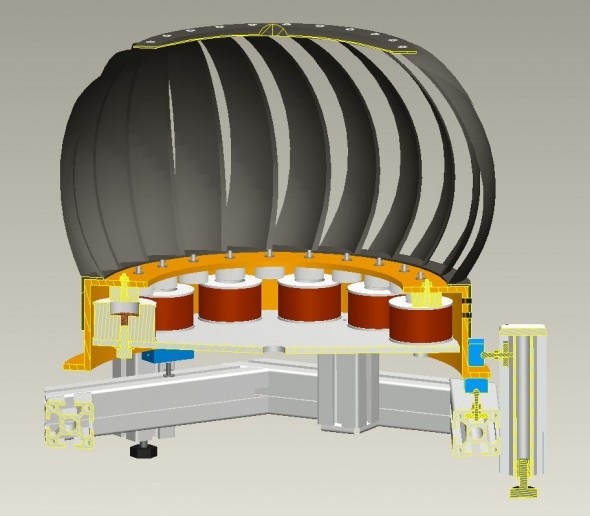
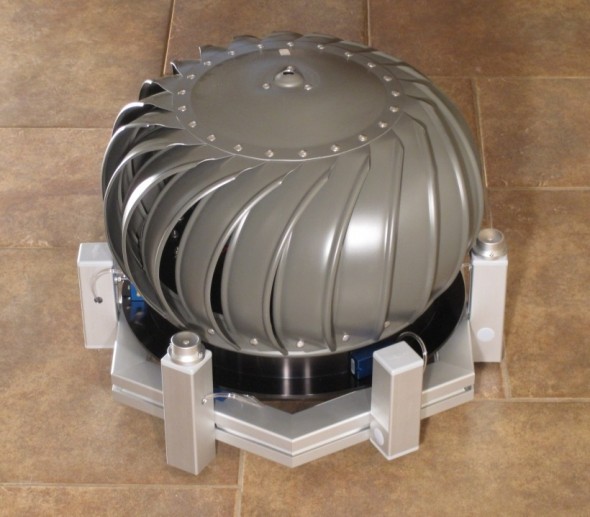
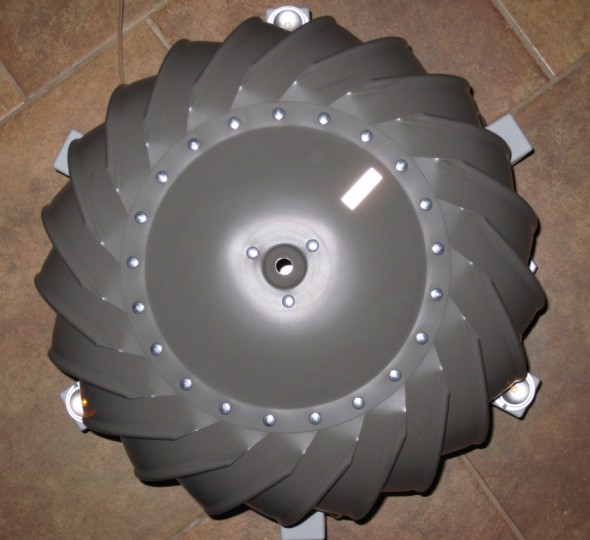
Infinity Physics provided engineering and marketing consulting to support client needs in preparation for the 2012 Democratic National Convention and other state and federal presentation needs. This work entailed creation of a Vertical Axis Wind Turbine (VAWT) design provided per the client’s requirements. Special options included a single moving part supported entirely by air bearings. Pictures and marketing videos of this VAWT subscale demonstrator exceeding the client’s requirements are provided below.
The specific objective was to develop a VAWT marketing prototype. This VAWT prototype is intended for simple marketing meeting transport and operation, such as the 2012 Democratic National Convention.
The base VAWT system underwent further development during the 2013 National Science Foundation (NSF) Phase I Small Business Innovative Research (SBIR) grant. This work supports Infinity Physics internal product complex VAWT system needs.
 |
 |
 |
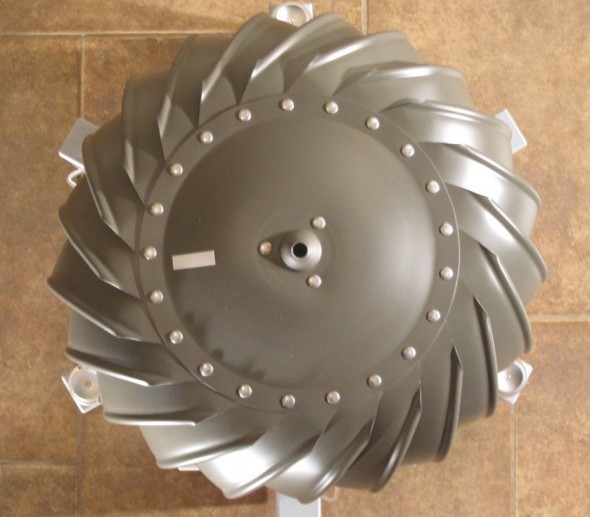 |
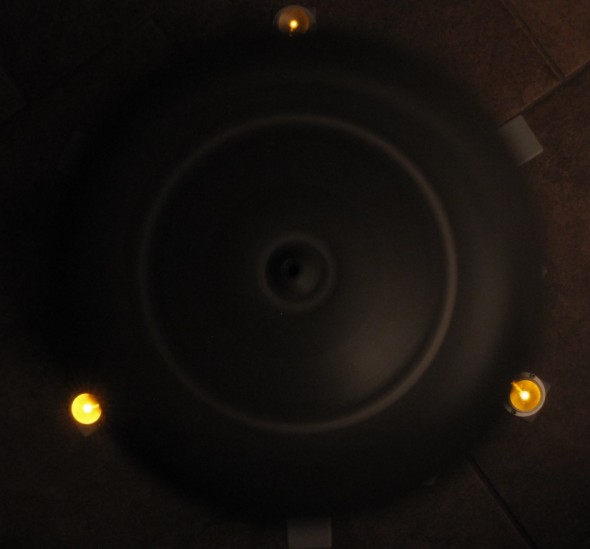
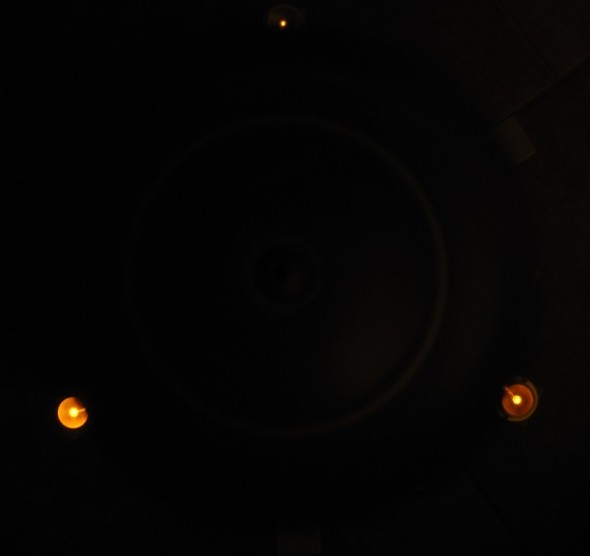
Increased VAWT generated power is indicated through an activation sequence of LED lights placed on top of the three VAWT upright support legs. After each LED achieves maximum illumination the next LED in sequence starts turn on. This setup provides a direct visual signal of increasing power generation through VAWT rpm increases.
 |
 |
 |
Example #2: LMHS
The following example is a set of analyses performed on an existing Infinity Physics product provides insight into the level of advanced multi-physics analysis common to our team.
System Level Mutliphysics Analysis
Complete system numerical and finite element analyses reside within a dynamically linked multiphysics domain comprised of conservative and non-conservative mathematical elements. All analyses completely reflect physical hardware design in every manner including logical major and minor subsystem formation and grouping as indicated by the top level of the LMHS simulation model shown in the figure below that was developed within the Mathworks software environment.
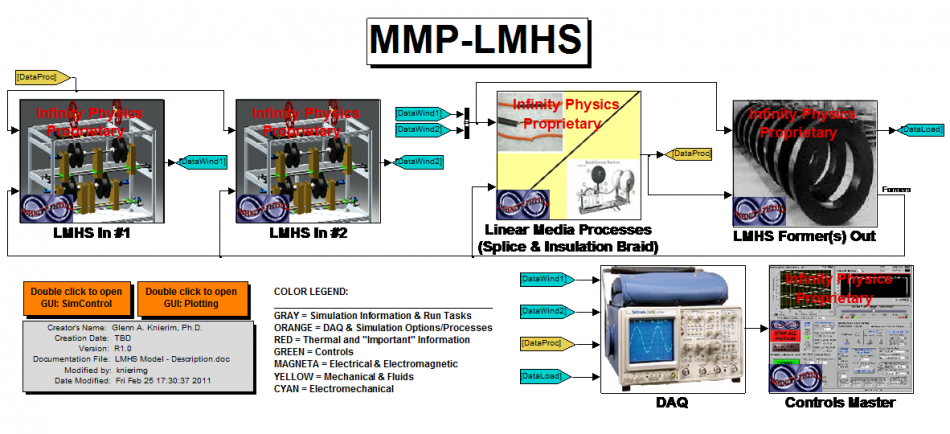
LMHS: Dual Process System Model – Top Level
The analysis tool even encompass all detailed physical hardware elements from the plant and associated actual control algorithms including DAQ sampling rates, filtering schemes, and lead and lag values as seen by each physical hardware controller or test team. Such details allow the analysis to reflect standard operational conditions through transient perturbations and fault disturbances in the same manner witnessed on physical hardware. This response level provides a simulation platform for establishing appropriate levels of system response bottlenecks and controller response to the level of essential control scheme optimization techniques to support this extremely delicate media need. All simulation data is acquired at a minimum of actual hardware sensor locations as well as other locations of importance.
The system integration model investigates the overall system response at various fidelity levels depending upon the physical power frequency flows set per the study type. The multiphysics analysis simulation time steps and fidelity levels account for appropriate power regimes as dictated by the dominant frequency spectrum of a particular physical response dynamic. Such analyses reflect actual hardware and associated test data sampling requirements. Primary electromechanical power flows typically reside within a lower frequency spectrum up to a few kilohertz. Although electrical and electromagnetic power flows also typically reside within the lower frequency spectrum, large amounts of power flows and associated system efficiency degradation also resides at the higher frequency levels for these physical power types. To confirm load flow regimes, appropriate electromechanical power flow frequency spectrum levels are quantified through power spectral density or Fourier frequency observations.
FEA
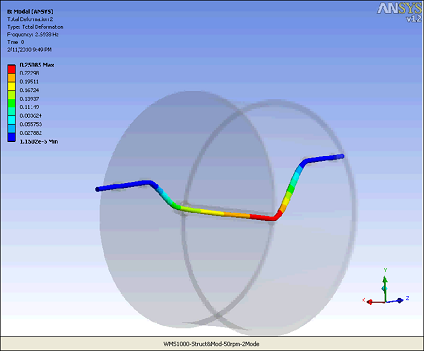
LMHS 1000 Series Modal Analysis Example
LMHS 1000 Series Modal Analysis Example
Particular analysis points of high interest are investigated more deeply with Finite Element Analysis (FEA). FEA also serves to support extreme non-linear numerical simulation plant input values through interpolation methods. An example of a preliminary 2nd mode at 50rpm modal analysis of the MMP-LMHS-1000 series former is provided in the figure below developed within the Ansys® software environment where the deflection is purposely magnified. This analysis illustrates the level of stiffened support structure to operational dynamics and vibration trades. Since extremely precise sensor measurements and feedback response are required for very large rotational loads, approaching 1 ton for the common 1000 series case, the analysis must consider natural and forced vibration modes for the primary operational speed ranges.